








Artwork valuation helps artists understand what supports a price before they list their work for sale.
Many artists know exactly when an artwork is finished.
Fewer artists know exactly how much it should cost.
That gap creates one of the most common problems in the art market: pricing by guesswork.
An artist may look at similar works online, ask friends, check social media, calculate materials, and still feel unsure. The result is often a price chosen under pressure, not a price built on evidence.
Artwork valuation helps artists move from uncertainty to a more structured pricing decision.
Guesswork Is Not a Pricing Strategy
Guesswork usually looks like this:
- “This feels like a $700 painting.”
- “Another artist listed something similar for $2,000.”
- “My friend said I should charge more.”
- “I need to sell fast, so I will price it lower.”
- “I spent a lot of time on this, so it should be expensive.”
Each thought may contain some truth.
But none of them is enough alone.
A serious artwork price should not depend only on emotion, comparison, or urgency. It should consider the artwork itself, the artist’s position, and the market around it.
What Artwork Valuation Actually Means
Artwork valuation is the process of estimating the value of an artwork based on relevant factors.
These may include:
- Artist profile
- Medium
- Size
- Year
- Condition
- Provenance
- Authenticity
- Comparable works
- Sales history
- Market demand
- Rarity
- Subject matter
- Exhibition or collection history
Professional art valuation sources often emphasize comparable sales, condition, provenance, demand, and market trends as core elements. RICS also notes that provenance can directly influence valuation opinions.
In simple terms:
Valuation asks what supports the price.
Guesswork asks what number feels right.
Why Artists Need Artwork Valuation Before Listing
When you list an artwork online, the price becomes public.
That price can influence:
- Buyer trust
- Negotiation behavior
- Your perceived professionalism
- Your future pricing
- Marketplace performance
- Collector confidence
- Your long-term artist positioning
If the price is not supported, buyers may hesitate.
If the price is too low, you may sell quickly but weaken your future pricing power.
Valuation helps you avoid making the price field a random decision.
The Problem With Asking Friends
Asking friends can feel helpful.
But friends are rarely neutral market references.
One person may say, “Charge more, your work is amazing.”
Another may say, “Keep it affordable so someone buys it.”
A third may compare your painting to something they saw online.
These opinions may be kind, but they are not valuation.
A serious price should not depend only on personal encouragement.
The better approach is to combine human judgment with structured market logic.
The Problem With Random Marketplace Comparison
Looking at marketplaces can help, but only if you know what you are looking at.
The problem is that many visible prices are asking prices, not verified sale prices. A painting listed for $5,000 may have no buyer. Another listed for $800 may sell quickly because the artist has a strong audience.
Without context, marketplace browsing can create more confusion.
You may see:
- One similar artwork for $300
- Another for $1,500
- Another for $4,000
Then the question becomes even harder:
Which one is actually relevant to your work?
Valuation helps organize the comparison.
What Buyers Want to Know
Buyers may not always say it directly, but they often want answers to questions like:
- Why does this artwork cost this amount?
- Is the price fair?
- Is the artist consistent?
- Is the work original?
- Is there any market support?
- Is this price inflated?
- Can I trust the listing?
A clear valuation reference helps the artist communicate more professionally.
It does not guarantee a sale, but it improves the logic behind the price.
Why Artwork Valuation Matters for Emerging Artists
Emerging artists often face a difficult situation.
They may not have auction records, gallery history, or a long sales archive. But they still need to price their work.
This is where structured valuation becomes useful.
For emerging artists, valuation can consider more than past sales. It can include artwork details, visual characteristics, market comparables, medium, size, style, and available artist information.
Recent academic research on art market valuation also suggests that visual data can add value in valuation models, especially for fresh-to-market works where historical transaction history is limited.
This matters because many artists are not yet part of traditional art market databases.
They still need a better pricing process.
Valuation Does Not Replace the Artist
A valuation should not be treated as a command.
It is a reference.
The artist still decides the final listing price based on:
- Desired market positioning
- Willingness to negotiate
- Urgency to sell
- Collector relationship
- Commission and fees
- Whether the work is framed
- Whether shipping is included
- Whether the work belongs to an important series
Valuation gives the artist a stronger base.
The final decision remains strategic.
How to Use an Artwork Valuation Result
After receiving a valuation, an artist can use it in several ways.
1. Set a Listing Price
Use the valuation as the foundation for your marketplace price.
2. Prepare for Buyer Questions
A valuation helps you speak about the price with more confidence.
3. Build Long-Term Pricing Consistency
Over time, valuation can help you create a more professional pricing structure across your portfolio.
Before You List, Get an Artwork Valuation
The price field should not be the moment where confidence disappears.
It should be the final step after a serious process.
Before you upload your artwork to a marketplace, before you send the price to a buyer, before you publish the listing, take time to understand the value.
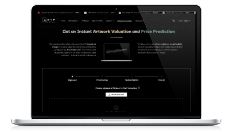
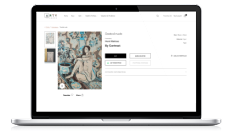
With ArtyTraders Artwork Valuation, artists can submit their artwork, add key details, and receive a data-backed valuation reference before listing.
Replace random guessing with structure.
Price with clarity instead of panic.
Use market context before following another artist’s price.
Know the value before you list.
Submit your artwork to ArtyTraders and get your artwork valuation.